Introduction
If you’ve ever wondered why your website isn’t showing up on Google’s first page, while your competitors seem to effortlessly sit at the top, you’re not alone. Getting your website to rank higher on Google is one of the most common (and most misunderstood) challenges in digital marketing.
Here’s the short answer: to rank higher on Google, you need to produce content that genuinely satisfies search intent, earn authoritative backlinks, ensure your website is technically sound, and consistently demonstrate expertise in your niche. There’s no shortcut, but there is a clear, repeatable system.
In this guide, you’ll learn:
- How Google’s ranking algorithm actually works in 2026
- The exact steps to optimize your content, site structure, and authority
- Common mistakes that silently kill rankings — and how to avoid them
- Practical tools and techniques you can implement today
Whether you’re a blogger, business owner, or marketing professional just getting started with SEO, this guide will give you a clear roadmap to get your website higher on Google and keep it there.
How Google’s Ranking Algorithm Works (And Why It Matters)
Before diving into tactics, it helps to understand what Google is actually trying to do. Google’s mission is to surface the most helpful, trustworthy, and relevant content for any given search query. Its algorithm evaluates hundreds of signals to decide which pages deserve the top spots.
In 2026, those signals broadly fall into four pillars:
- Content quality and relevance: Does your page genuinely answer the query?
- Technical performance: Is your site fast, crawlable, and mobile-friendly?
- Authority and trust: Do other credible websites link to or reference you?
- User experience signals: Do people stay on your page, or immediately bounce back to search results?
Understanding these four pillars is the foundation of everything that follows. Neglect any one of them and your efforts in the others are undermined.
Also read: What Is Search Engine Ranking: (Complete Guide).
Step 1: Master Keyword Research (The Right Way)
Keyword research is where every successful SEO strategy begins, but most beginners do it wrong. The goal isn’t to find the highest-volume keyword and stuff it into your content. It’s to understand exactly what your target audience is searching for, why they’re searching for it, and what kind of content will best satisfy that need.
Focus on Search Intent, Not Just Volume
Every search query has an intent behind it, what the user actually wants to accomplish. Google has become remarkably good at identifying intent, and it rewards pages that match it precisely.
There are four main types of search intent:
- Informational: The user wants to learn something. (“How to rank higher on Google”)
- Navigational: They’re looking for a specific website. (“Google Search Console login”)
- Commercial: They’re researching before buying. (“Best SEO tools 2026”)
- Transactional: They’re ready to take action. (“Buy Ahrefs subscription”)
If your content doesn’t match the intent behind a keyword, it simply won’t rank — no matter how well it’s optimized technically.
Target Long-Tail Keywords to Build Momentum
Long-tail keywords are longer, more specific phrases with lower search volume but dramatically less competition. A beginner site has virtually no chance of ranking for “SEO”, but it might rank for “how to improve SEO for a small business blog.”
Long-tail keywords also convert better, because users who search specific phrases tend to know exactly what they want.
Practical tip: Use tools like Google Search Console (free), Ahrefs, or Semrush to find long-tail variations of your primary keyword. Look for terms with clear intent and moderate competition.
Analyze What’s Already Ranking
Before you write a single word, study the top 5–10 results for your target keyword. Ask:
- What format do they use (list, guide, video, table)?
- How long are the articles?
- What subtopics do they cover?
- What are they missing that users are still asking about?
Your goal isn’t to copy what’s there — it’s to understand the bar and then clear it.
Step 2: Create Content That Genuinely Earns Its Ranking
Content is still the single most important ranking factor, but the bar for “quality” is higher than ever. Google’s Helpful Content system actively demotes content that feels written for search engines rather than people.
Write for Humans First, Algorithms Second
The best SEO content reads like it was written by someone who has lived the topic, not just researched it. Google’s E-E-A-T framework (Experience, Expertise, Authoritativeness, Trustworthiness) is the lens through which it evaluates this. Demonstrating real experience — through case studies, specific examples, unique data, or first-person insights — is one of the clearest ways to signal authority.
This matters especially in 2026, when AI-generated content floods the web. Pages that offer genuine, differentiated insight are naturally rewarded.
The Concept of “Information Gain”
One of the most powerful (and underused) concepts in modern SEO is information gain — the idea that your content should provide insights, angles, or data that other ranking pages don’t offer. If you’re simply paraphrasing what the top 10 results already say, you’re giving Google no reason to rank you over them.
Practical ways to add information gain:
- Include your own data, survey results, or original research
- Address a frequently asked sub-question that competitors ignore
- Add a unique framework or model that organizes the topic in a new way
- Challenge a common assumption with evidence
Match Content Length to Query Complexity
Longer isn’t always better. A “what is X” query can often be answered in 600 words. A step-by-step guide to a complex process might need 3,000+. Let the query — and the user’s actual needs — dictate length, not a word-count target.
That said, comprehensive coverage of a topic does signal topical authority to Google. If you’re targeting a competitive keyword, a thorough, well-structured article tends to outperform a thin one.
Step 3: Nail On-Page SEO
On-page SEO refers to all the optimizations you make directly on your webpage. These are the signals Google reads first when crawling your content.
Title Tag Optimization
Your title tag is one of the strongest on-page ranking signals. It should:
- Include your primary keyword (ideally near the beginning)
- Be compelling enough to earn the click (your CTR affects rankings too)
- Stay under 60 characters to avoid truncation in search results
- Accurately reflect what the page delivers — misleading titles increase bounce rate
Example of a weak title: “SEO Tips” Example of a strong title: “How to Rank Higher on Google: 12 Proven Strategies (2026)”
Meta Description
While not a direct ranking factor, your meta description influences click-through rate — which affects rankings indirectly. Write a description that:
- Summarizes the page clearly and enticingly
- Includes the primary keyword naturally
- Stays under 155 characters
- Ends with a subtle call to action
Header Tag Structure (H1, H2, H3)
Use a single H1 that contains your primary keyword. Your H2s should cover major subtopics and naturally incorporate secondary keywords. H3s break down those subtopics further.
This hierarchy does two things: it helps Google understand your content’s structure, and it makes your article far easier for humans to read and navigate.
Keyword Placement (Without Stuffing)
Place your primary keyword:
- In the first 100 words of your introduction
- In at least one H2 heading
- A few times throughout the body (naturally — never forced)
- In the conclusion
Related semantic terms — synonyms, adjacent concepts, and entity-based phrases — should appear throughout. Google understands meaning, not just exact keyword matches. Writing naturally tends to handle this automatically.
URL Structure
Your URL slug should be short, descriptive, and keyword-inclusive. Use hyphens, lowercase letters, and avoid stop words where possible.
| Weak URL | Strong URL |
|---|---|
| /post?id=4829 | /how-to-rank-higher-on-google |
| /blog/article-about-seo-tips-for-beginners-2026 | /seo-tips-for-beginners |
| /services/page1 | /seo-services |
Image Optimization
Every image on your page should have a descriptive alt text that includes relevant keywords where natural. Compress images before uploading — oversized images are one of the most common causes of slow page load times.
Step 4: Build Technical SEO Foundations
You can have the best content in the world, but if Google can’t find, crawl, and index it efficiently, you’re invisible. Technical SEO is the infrastructure that makes everything else work.
Ensure Your Site Is Indexable
Start by checking Google Search Console for crawl errors and indexing issues. Your most important pages should be properly indexed. Make sure your robots.txt file isn’t accidentally blocking pages, and that your XML sitemap is submitted and up to date.
Improve Page Speed (Core Web Vitals)
Google uses Core Web Vitals as direct ranking signals. The three metrics to prioritize are:
- Largest Contentful Paint (LCP): How fast does the main content load? Aim for under 2.5 seconds.
- Interaction to Next Paint (INP): How responsive is your page to user interactions? Target under 200ms.
- Cumulative Layout Shift (CLS): Does your content jump around while loading? Keep this score below 0.1.
Quick wins for page speed:
- Compress and convert images to modern formats (WebP)
- Minify CSS and JavaScript files
- Enable browser caching
- Use a Content Delivery Network (CDN) like Cloudflare
- Switch to a faster hosting provider if necessary
Mobile-First Optimization
Google indexes and ranks the mobile version of your website first. If your site looks broken or loads slowly on a phone, it will rank lower — period. Use Google’s Mobile-Friendly Test to assess your current standing.
HTTPS and Site Security
If your site still uses HTTP, switch to HTTPS immediately. Google confirmed HTTPS as a ranking signal years ago, and users see “Not Secure” warnings on HTTP sites — killing trust instantly.
Fix Broken Links and Redirect Chains
Broken internal links waste crawl budget and damage user experience. Redirect chains (301 > 301 > 301) dilute link equity. Tools like Screaming Frog or Ahrefs Site Audit can surface these issues quickly.
Step 5: Build Topical Authority Through Content Strategy
One of the most important shifts in Google’s algorithm over the past few years is the move toward rewarding topical authority — sites that comprehensively cover a subject area rather than publishing scattered, unrelated content.
Use the Pillar-Cluster Content Model
The pillar-cluster model organizes your content into:
- Pillar pages — Long, comprehensive guides covering a broad topic (e.g., “The Complete Guide to SEO”)
- Cluster pages — Focused articles on specific subtopics that link back to the pillar (e.g., “How to Do Keyword Research,” “What Is Link Building,” “Technical SEO Checklist”)
This structure tells Google that your site has deep expertise in a specific domain. Internal links between cluster pages and the pillar page distribute authority and make it easier for Google to understand the relationships between your content.
Publish Consistently in Your Niche — and Stay There
Topical authority comes from depth, not breadth. A food blog that suddenly starts publishing articles about cryptocurrency is sending confusing signals to Google. Publish content that reinforces your core subject matter.
Step 6: Earn High-Quality Backlinks
Backlinks — links from other websites pointing to yours — remain one of Google’s most powerful ranking signals. A single link from an authoritative, relevant website can move the needle more than dozens of low-quality links.
What Makes a “High-Quality” Backlink?
- It comes from a site with genuine traffic and authority
- The linking site is topically relevant to your niche
- The link appears naturally within content, not in a footer or sidebar
- The anchor text is descriptive and relevant
Proven Link Building Strategies
Guest posting: Write genuinely useful articles for reputable publications in your niche. Include a contextual link back to relevant content on your site.
The Skyscraper Technique: Find well-linked content in your niche, create a significantly better version, then reach out to sites linking to the original and suggest your improved resource.
Original data and research: Studies, surveys, and original statistics are among the most naturally linkable content types. Other writers cite data — so if your site is the source, you earn the links.
Digital PR: Get mentioned in press coverage, podcast appearances, or industry roundups. These often produce high-authority links you couldn’t earn through traditional outreach.
Reclaim unlinked mentions: Search for your brand name or content being referenced online without a link. A polite email asking for credit often converts to a backlink.
What to Avoid
Never buy links from link farms or private blog networks (PBNs). Google’s Spam Brain system is sophisticated at detecting unnatural link patterns, and a manual penalty can tank your rankings overnight. Quality over quantity — always.
Step 7: Optimize for SERP Features and AI Overviews
In 2026, ranking #1 in the traditional blue-link results is no longer the whole game. Google’s search results page (SERP) now includes AI Overviews, featured snippets, People Also Ask boxes, knowledge panels, and more.
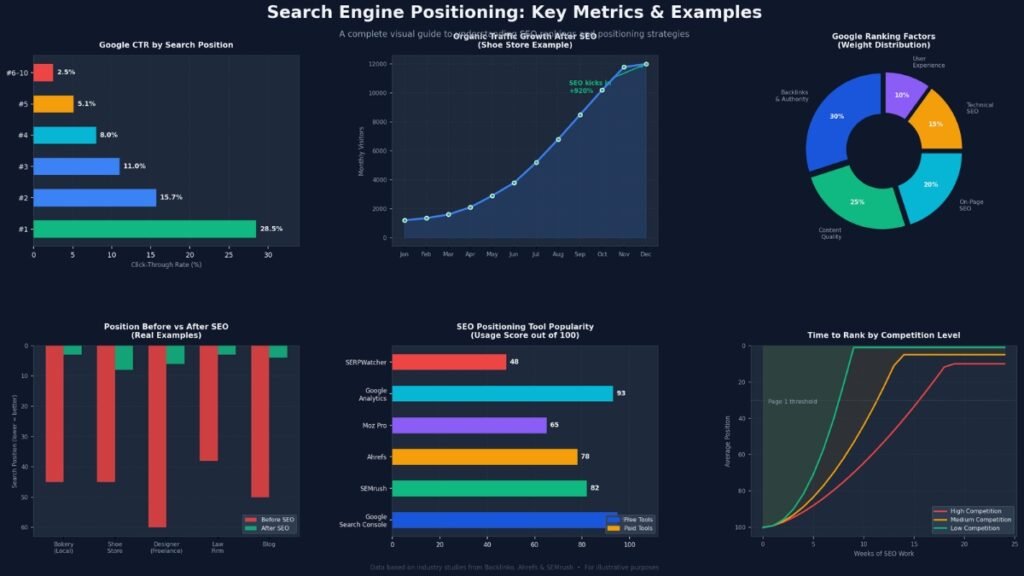
Studies show that when an AI Overview appears above organic results, the top organic listing can lose up to 58% of its expected clicks. The new goal is to be the source that Google’s AI pulls from — not just to rank below it.
How to Optimize for Featured Snippets
Featured snippets typically pull from content that:
- Directly answers a question in a clear, concise format
- Uses a definition, numbered list, or table that can be extracted
- Appears on a page that already ranks in the top 10
To target snippets, identify question-based queries your page covers and include a crisp, direct answer immediately below the question heading. Two to four sentences is often ideal for definition snippets; numbered lists work well for “how to” queries.
Optimize for “People Also Ask” (PAA)
PAA boxes are a high-visibility real estate opportunity. Each expanded answer in PAA comes from a specific page. Include FAQ-style sections in your content that directly answer common follow-up questions in plain language.
Structured Data (Schema Markup)
Schema markup is code added to your pages that gives Google explicit context about your content. It’s what powers rich results — star ratings, FAQ dropdowns, recipe cards, event dates, and more.
For informational content, FAQ schema is particularly valuable. It can cause your search listing to expand visually with question-and-answer dropdowns, increasing your click-through rate significantly.
Step 8: Track, Measure, and Iterate
SEO isn’t a one-time project — it’s an ongoing process. You need to consistently monitor what’s working, identify what isn’t, and adapt.
Essential Tools for Tracking Rankings and Traffic
| Tool | Purpose | Cost |
|---|---|---|
| Google Search Console | Track rankings, clicks, impressions, crawl issues | Free |
| Google Analytics 4 | Monitor organic traffic, behavior, conversions | Free |
| Ahrefs | Keyword research, backlink analysis, site audit | Paid |
| Semrush | Competitor analysis, keyword tracking | Paid |
| PageSpeed Insights | Core Web Vitals, performance fixes | Free |
Key Metrics to Monitor
- Organic traffic — Is your overall search traffic growing?
- Keyword rankings — Are your target pages moving up in position?
- Click-through rate (CTR) — Are users clicking on your results?
- Bounce rate and dwell time — Are visitors engaging, or immediately leaving?
- Backlink profile — Are you earning new links? Losing old ones?
Update Existing Content Regularly
One of the highest-ROI activities in SEO is refreshing old content. Pages that once ranked well can slip over time as competitors publish better content or information becomes outdated. A targeted update — adding new sections, updated statistics, improved examples — can quickly restore and exceed previous rankings.
Also see: How Google Ranks Websites.
Common SEO Mistakes That Kill Rankings
Even experienced marketers make these errors. Check yourself against this list.
1. Targeting keywords that are too competitive too early. A brand-new site has no domain authority. Starting with long-tail, low-competition keywords builds momentum you can leverage later.
2. Ignoring search intent. Optimizing a page for a keyword but delivering the wrong type of content (e.g., a product page for an informational query) is one of the most common reasons pages fail to rank.
3. Thin content. Short, surface-level articles that don’t fully address a topic fail to satisfy users — and Google knows it.
4. Neglecting internal linking. Internal links distribute authority across your site and help Google understand your content hierarchy. Many sites leave significant ranking potential on the table by ignoring this.
5. Chasing vanity metrics. Obsessing over keyword rankings while ignoring traffic quality, engagement, and conversions can lead you to optimize for the wrong things.
6. Not fixing technical issues. Crawl errors, broken redirects, and slow pages quietly suppress rankings without any obvious warning signs.
7. Giving up too soon. SEO operates on a timeline of weeks and months, not days. Most pages take 3–6 months to reach their full ranking potential. Consistency is the determining factor for most sites.
Pro Tips From the Trenches
Start with a site audit before anything else. Use Google Search Console and a tool like Screaming Frog to get an honest baseline of your current strengths and gaps. Fix technical problems first — they often produce quick wins.
Prioritize “position 11–20” pages. Any page ranking on page two for a target keyword is low-hanging fruit. A targeted refresh — better introduction, added sections, improved formatting — can push it to page one relatively quickly.
Use internal links strategically. Link from your highest-authority pages to the pages you most want to rank. Anchor text matters — use descriptive, keyword-inclusive phrases rather than “click here.”
Earn topical authority before chasing competitive keywords. Build a content cluster around a narrow niche first. Once you’re the go-to resource for specific subtopics, competing for broader terms becomes much more achievable.
Write for AI Overviews, not just traditional rankings. Structure your content to be extractable — clear definitions, numbered steps, concise answers to specific questions. This is how you get cited in AI-generated summaries.
FAQ: How to Rank Higher on Google
Q2: Can I rank higher on Google without backlinks? For low-competition, long-tail keywords — yes, especially if your content is genuinely comprehensive. But for competitive terms, backlinks remain one of the strongest signals. Most high-ranking pages in competitive niches have significant link profiles.
Q3: Does updating old content help rankings? Absolutely. Refreshing outdated articles with new information, better structure, and additional depth is one of the fastest ways to improve rankings. Google favors pages that are current and comprehensive.
Q4: How many keywords should I target on one page?
Focus on one primary keyword per page, plus several closely related secondary keywords and semantic phrases. Targeting too many unrelated keywords on one page dilutes the page’s topical focus and confuses Google about its intent.
Q5: Is social media important for Google rankings?
Social media doesn’t directly influence Google rankings — social shares aren’t a ranking signal. However, strong social presence can drive traffic to your content, increase brand awareness, and lead to natural backlinks — all of which do affect rankings indirectly.
Q6: What is the fastest way to rank higher on Google?
There’s no guaranteed shortcut, but the quickest path typically involves: fixing technical SEO issues, refreshing existing content that’s close to ranking, targeting low-competition long-tail keywords, and building a few high-quality backlinks to your most important pages.
Q7: Does Google rank AI-generated content lower?
Google has stated it rewards “helpful, people-first content” regardless of how it’s produced. However, AI-generated content that’s generic, repetitive, or fails to add unique value tends to perform poorly because it doesn’t differentiate itself — not because it’s AI-generated per se.
Learn more about search engine basics.
Conclusion
Ranking higher on Google in 2026 comes down to a set of principles that haven’t fundamentally changed in years — but the execution has become more nuanced. Satisfy search intent better than anyone else. Build genuine authority through quality content and backlinks. Keep your technical foundations clean. And measure everything so you can improve continuously.
The sites that consistently rank at the top of Google are rarely the ones that found a clever trick. They’re the ones that built the most trustworthy, most comprehensive, most user-focused resources in their niche — and then kept improving them.
Use this guide as your roadmap. Start with your technical audit, identify the keyword opportunities where you have the best chance, publish content that genuinely earns its ranking, and build patiently. The results compound over time in ways that almost no other marketing channel can match.